

2026 Short Drama Market Competition Intensifies: How NetMarvel Helps Advertisers Achieve Growth?


The short drama market kicked off 2026 with challenging situations.
On a macro level, the global short drama market delivered strong results in 2025, with both downloads and revenue showing robust growth. Market demand remains high, and short drama platforms and content creators are experiencing unprecedented opportunities.
However, growth has not been evenly distributed among all participants. Structural challenges within the short drama market have intensified, with the “Matthew Effect” becoming more apparent: revenue concentration is extremely high, with the top three platforms commanding over 50% of the market share. At the same time, major companies and media giants are continuing to enter the market, increasing competition pressure.
At the start of this year alone, several companies have stepped up their investments in the short drama sector:
On January 20, TikTok launched its independent short drama platform, PineDrama, in the U.S. and Brazil;
On February 11, Instagram began testing a short drama section, allowing creators to post short dramas on the platform;
On February 26, iQIYI launched its overseas short drama app DramaSugar in Japan.
In this context, the key challenge for short drama platforms is how to break through traffic barriers and achieve both growth and revenue gains. In the following analysis, we will explore the opportunities and latest insights for short drama apps expanding internationally and offer actionable solutions.
1. Rising Market Concentration and Intensifying Polarization
From a macro perspective, the global short drama market is growing at an impressive pace.
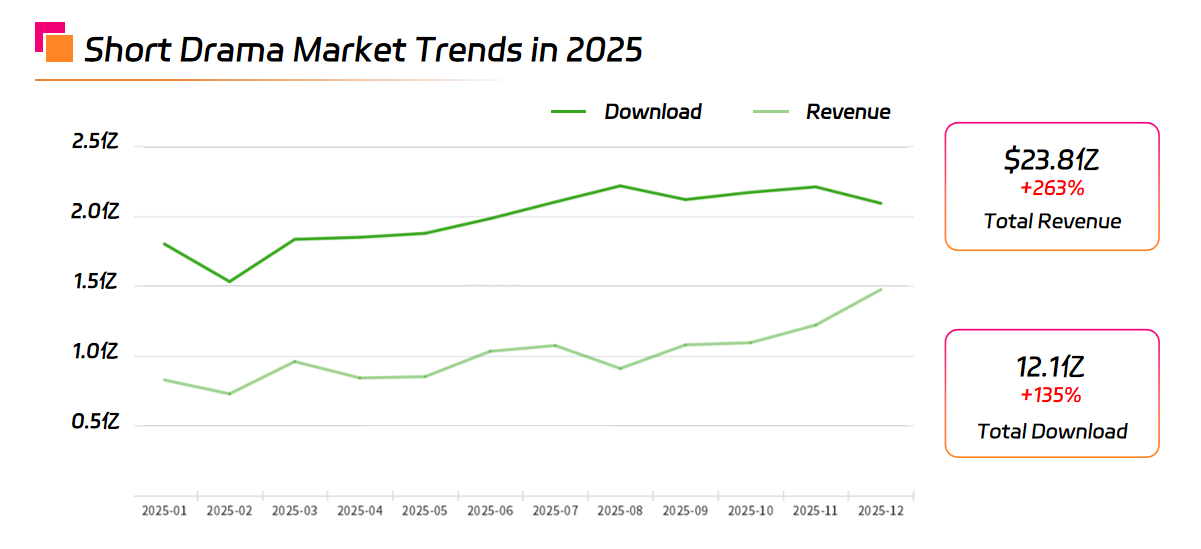
In 2025, the short drama market performed exceptionally well, with user demand and market size expanding. Total revenue reached $2.38 billion, a 263% year-on-year increase, while downloads hit 1.21 billion, up 135% year-on-year.
However, data for individual participants tells a less rosy story.
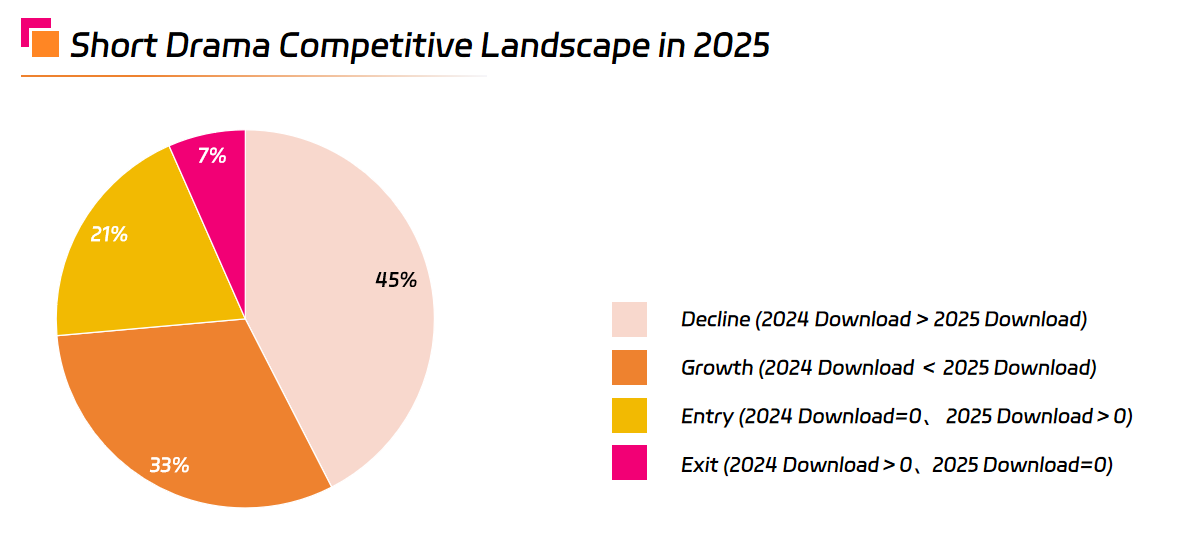
According to industrial statistics, about 45% of short drama apps saw negative download growth, with nearly half of them experiencing a decline of more than 50% year-on-year. In this downtrend, smaller apps with weaker risk resilience are often the first to be eliminated. By 2025, 7% of apps exited the market, all of which had annual downloads below 700,000.
Where did the market's growth go? By analyzing the data of leading products, we can find some clues.
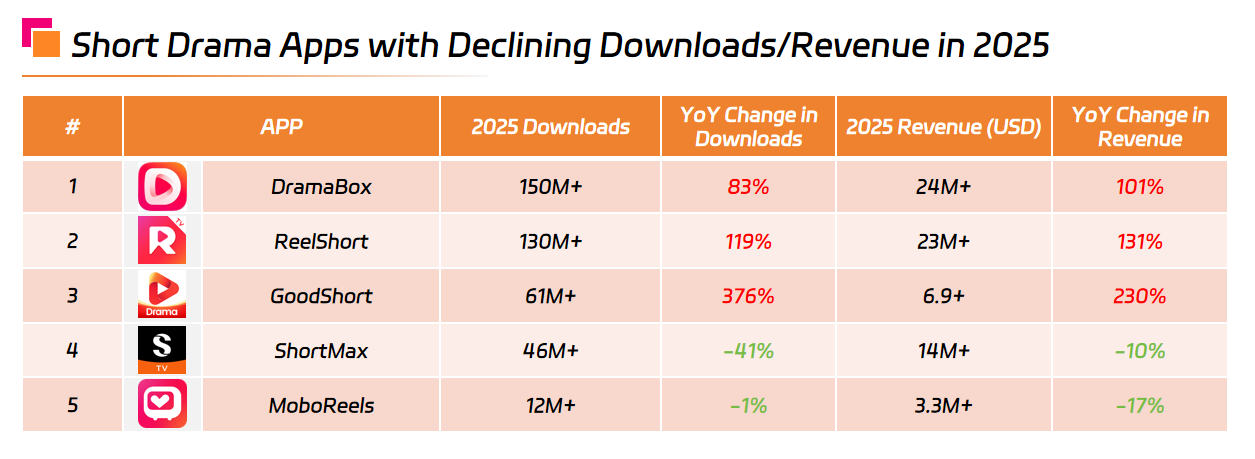
Among the top 5 short drama apps, except for ShortMax and MoboReels, which faced growth bottlenecks in 2025 with notable declines in downloads and revenue, other apps continued to grow rapidly. DramaBox retained the top spot for two consecutive years, with a 83% increase in downloads to 150 million and revenue doubling to $240 million. Meanwhile, GoodShort ranked third, with astonishing growth, seeing downloads and revenue increase by 376% and 230%, respectively.
This shows that overall market growth has become highly concentrated, with leading apps dominating through innovation and precise marketing, while apps at the market's tail end face bigger growth challenges.
2. Europe and the U.S. Are Core Advertising Markets
The competitive nature of the short drama market is particularly evident on the marketing front.
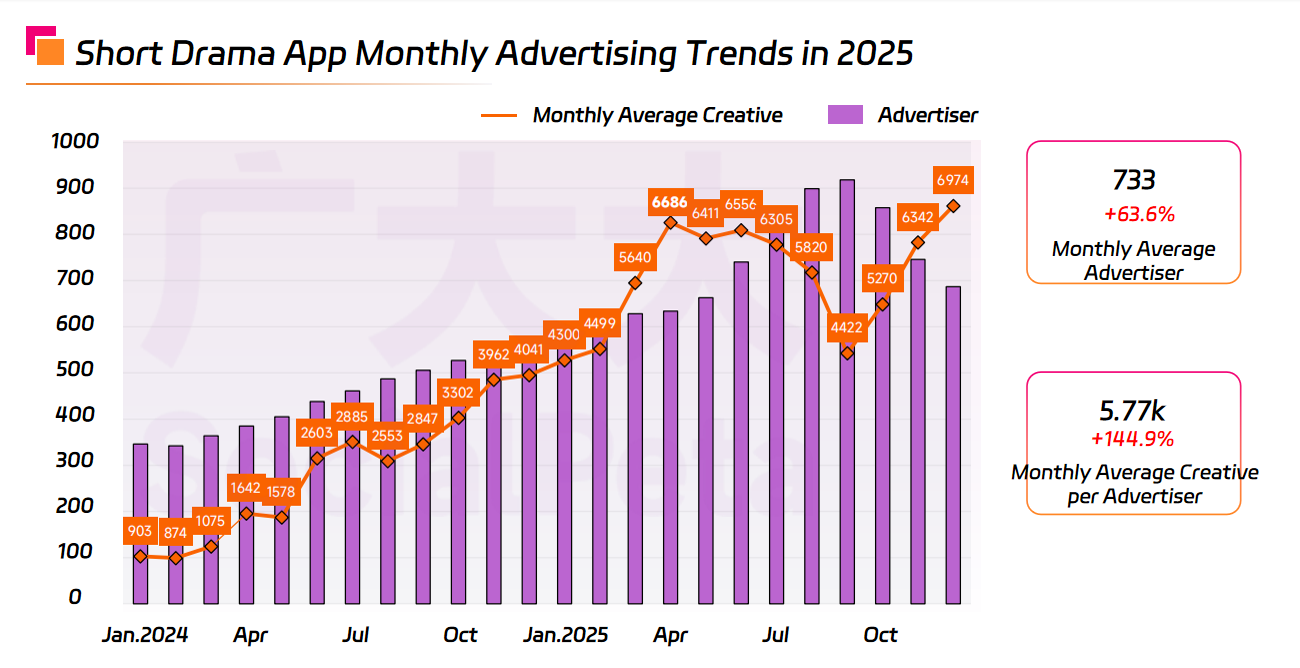
According to 2025 data, global short drama ad spending and the number of advertisers saw significant increases. The number of advertisers placing short drama ads each month exceeded 700, up 63.6% year-on-year. Additionally, there was further competition in creative materials, with material volume peaking in April and December, and the average material volume per advertiser increasing by 144.9% year-on-year.
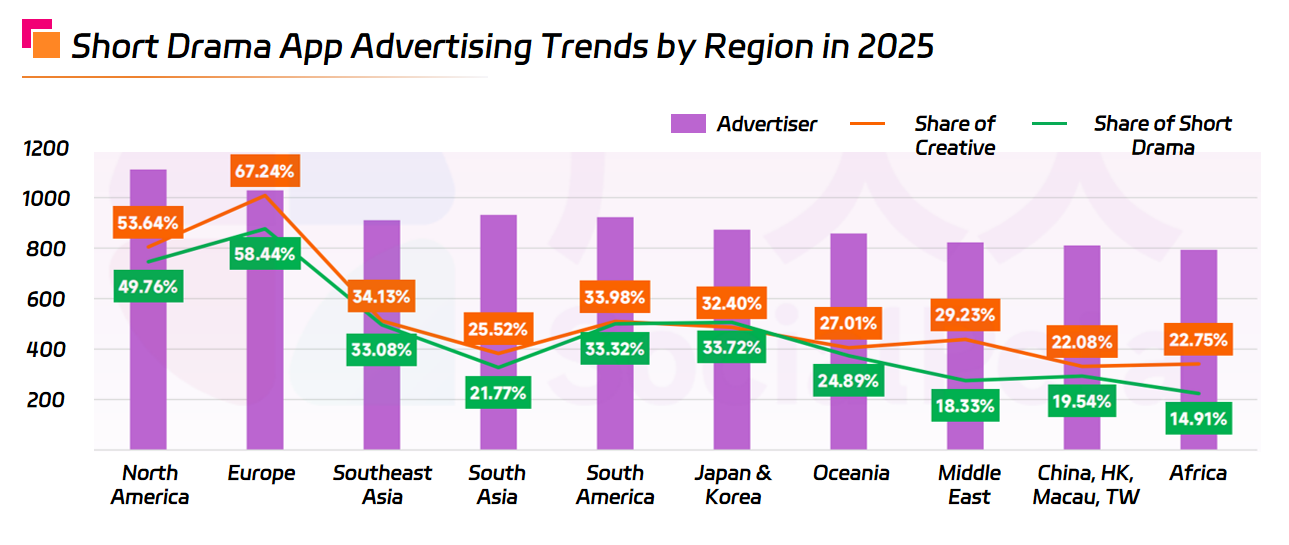
In terms of regional distribution, high-paying markets in Europe and the U.S. remain the preferred targets for short drama platforms, with over half of the short drama ad spending concentrated in these regions.
Specifically, the U.S. leads in terms of the number of advertisers, while Africa has fewer advertisers. As for creative material quantities, Europe leads, owing to the fragmented languages and cultural differences, requiring more creative versions per project to test effectiveness. This is followed by North America and Southeast Asia.
Regarding advertising data, while there are slight differences in rankings between iOS and Android platforms, the top 10 apps largely overlap. NetShort and DramaWave alternated between first and second positions on both platforms. ShortMax and DramaBox ranked third and fourth, respectively.
It is worth noting that Chinese companies dominate the global short drama market. Nearly all the apps in the top rankings are from Chinese developers, with the only exception being My Drama, developed by a Ukrainian company. Overall, the “consolidation at the top” and “dominance of Chinese apps” are clear characteristics of the market.
3. Winning Strategy: Content and Channels Are Both Crucial
Based on the above analysis, we believe the global short drama market has entered the critical stage of “stock competition” — growth is still happening, but the benefits are no longer widespread. How can short drama apps survive this “elimination race”? Content creativity and channel strategy have become key factors for success.
Content and creativity remain the “soul” of short dramas, attracting users and driving growth.
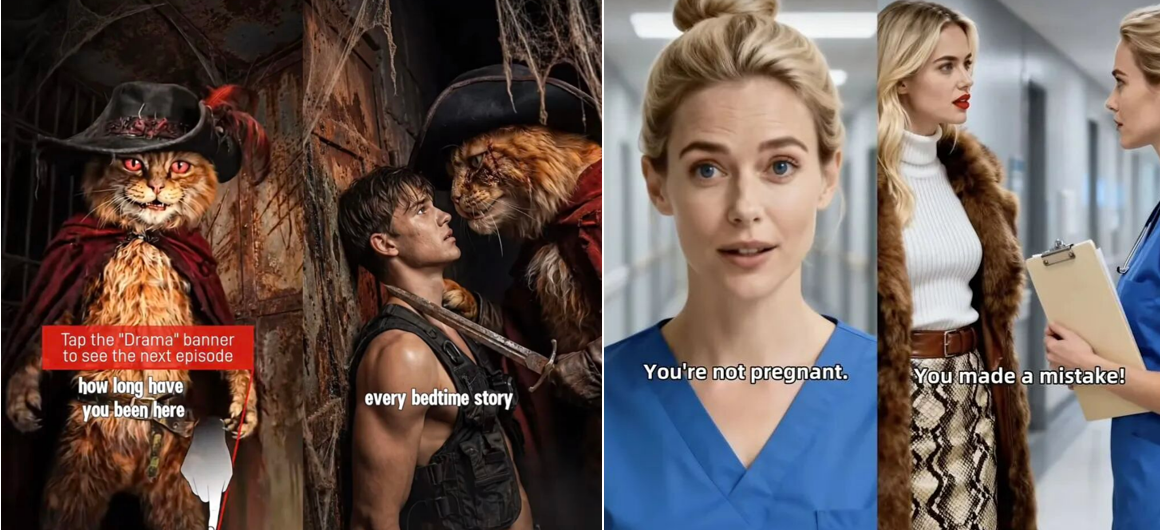
In the past year, the short drama market has undergone unprecedented changes. The application of AI technologies, such as Seedance2.0 and other innovative tools, has restructured the entire short drama production process. The rise of AI-generated drama and short dramas has exponentially increased the volume of productions, but it has also led to a flood of low-quality content. High-quality content that resonates with users is still a scarce resource in the market. As competition intensifies, users'demand for high-quality and differentiated content will continue to grow. Platforms and creators must focus more on the depth of content and cultural relevance to meet increasingly discerning tastes.
On the other hand, the choice of traffic acquisition channels determines the ceiling for user acquisition.
Statistics show that the top 15 short drama apps cover an average of more than 10 advertising channels, with 50%-70% of the channels coming from mid-to-long-tail open networks. This differentiated strategy effectively reduces the risk posed by relying on a single channel and improves the stability of large-scale growth.
In this context, NetMarvel, with its strong traffic advantages and leading ad operations, provides precise vertical traffic solutions for short drama advertisers. By aggregating both in-house and external media and apps across various categories, including games, tools, and general entertainment, NetMarvel offers vertical traffic resources that ensure short drama advertisers can reach highly relevant target audiences, significantly improving ad performance.

Moreover, with NetMarvel's self-controlled ad platform and operations team, they help short drama ads deliver cross-platform and cross-region customized advertising strategies, continuously optimizing ad effectiveness to achieve a win-win situation for growth and revenue, helping short drama apps stand out in the global market.
4. Conclusion
The 2026 short drama market will undoubtedly be a “survival of the fittest” endurance race.
The players who survive in this “stock competition” will often possess a “contradictory ability”: they are willing to focus on creating high-quality content and ideas while also excelling in discovering new traffic acquisition channels. They can grab market share in high-paying regions like Europe and North America, while also positioning themselves early in emerging regions like Southeast Asia and the Middle East. After all, in a market where user tastes are increasingly discerning and customer acquisition costs continue to rise, only teams that can master both “good content” and “precise reach” have the right to talk about achieving both growth and revenue gains.