

Q4 Marketing Playbook: From User Acquisition to More Efficient, Long-Term Growth


Q4 is typically the most competitive period of the year for mobile advertising. Seasonal demand, major shopping events, and year-end campaigns drive advertisers to increase spending, while rising competition puts further pressure on user acquisition costs.
In the US, Q4 ad spending is expected to reach $53.2 billion, up 13.0% YoY. Japan and Brazil are also seeing strong growth, with spending reaching $2.5 billion and $2.1 billion, up 21.6% and 13.0%, respectively.
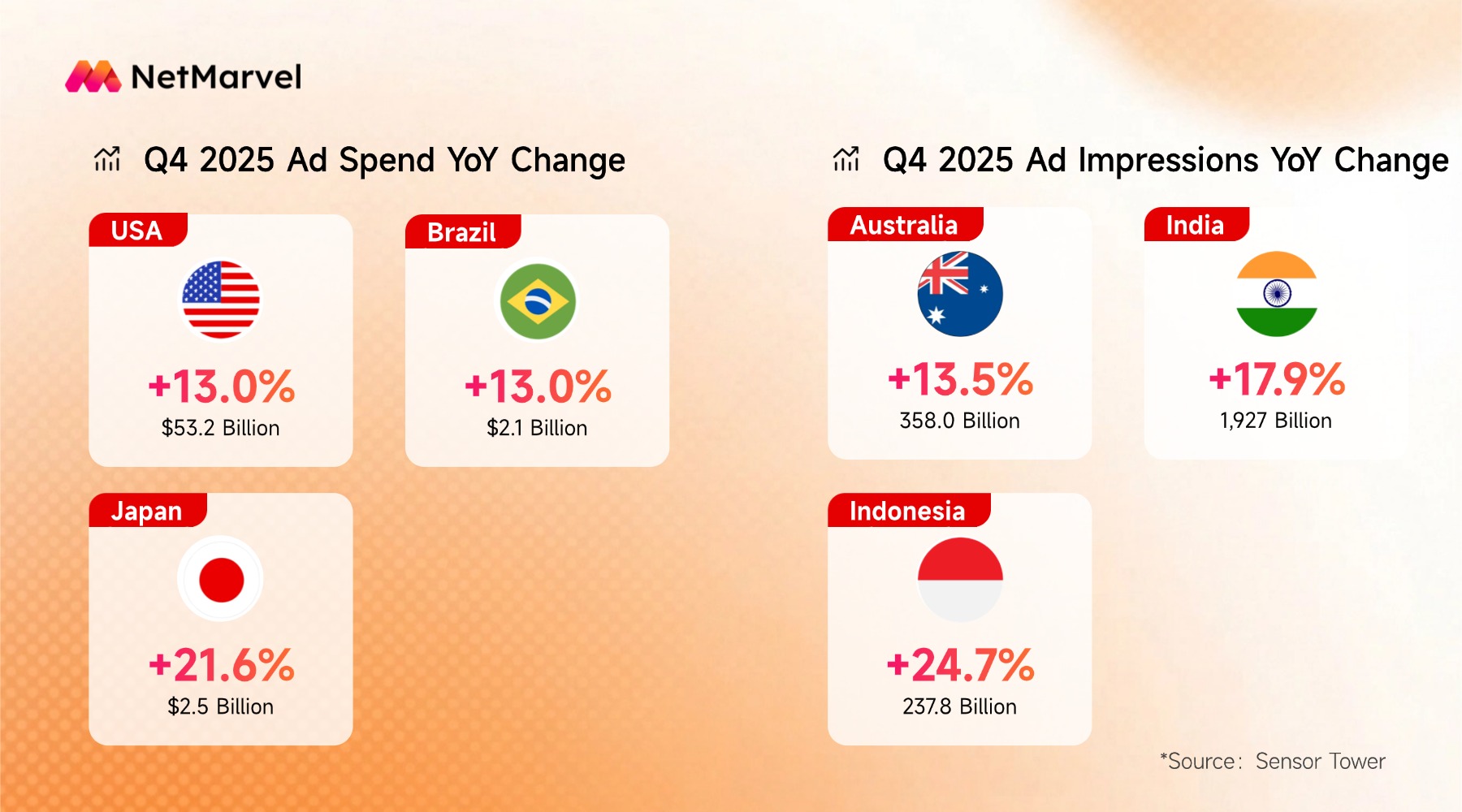
Ad impressions are growing rapidly across emerging markets as well. India is expected to reach 1.927 trillion impressions in Q4, up 17.9%, while Indonesia and Australia see growth of 24.7% and 13.5%.
Growth is not evenly distributed across verticals. In the US, gaming ad spend reaches $2.6 billion, up 21.1%, while software and health & fitness grow 20.1% and 16.9%. E-commerce remains a major advertising category, but its growth is more moderate at 2.9%.
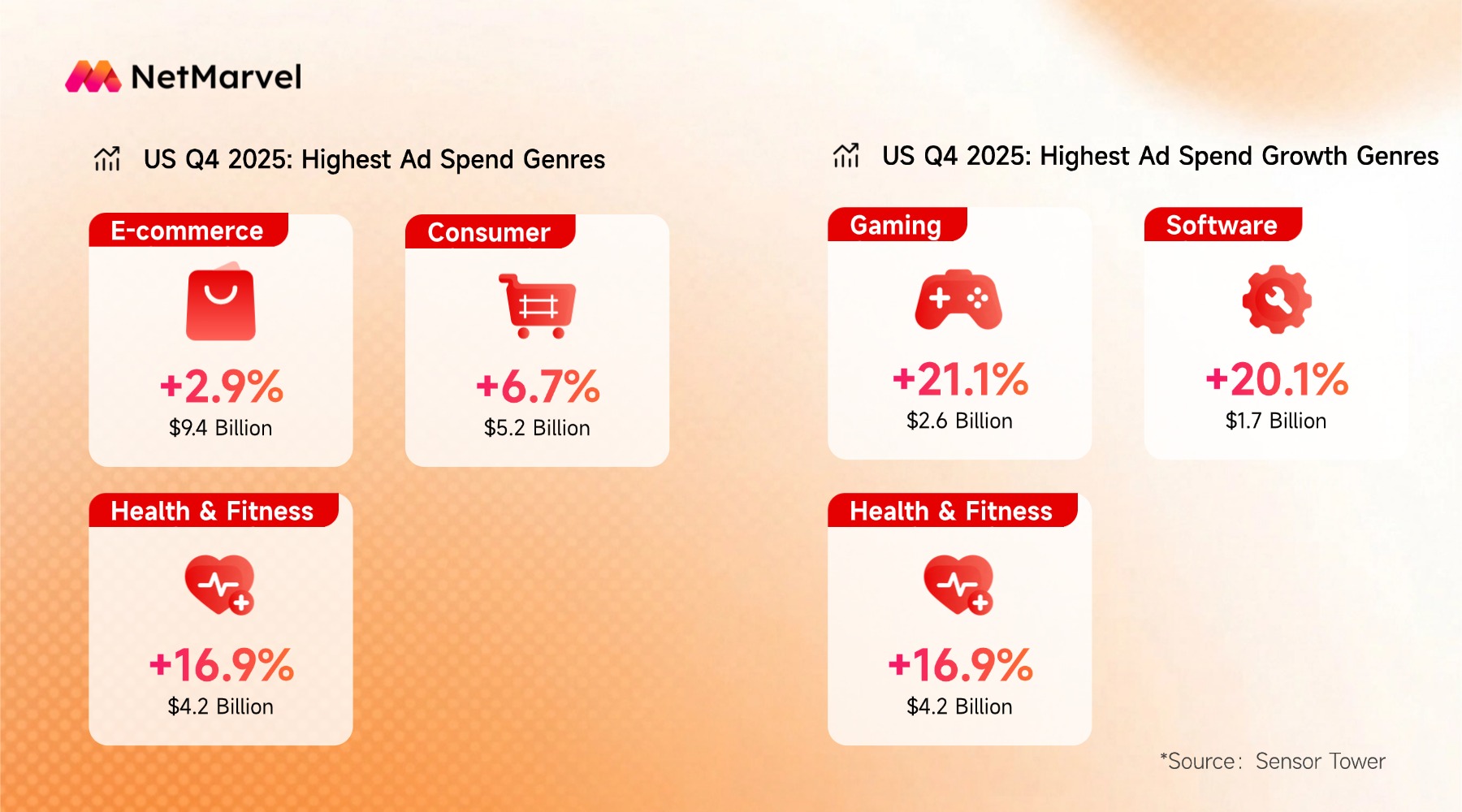
The implication is that Q4 competition is shifting from simply increasing budgets to making more precise decisions across markets, audiences, and channels.
Ⅰ. Rising CPI Makes Q4 Acquisition More Selective
Peak-season demand usually comes with higher acquisition costs. US CPI rises from $4.23 in Q3 to $4.89 in Q4, while Japan increases from $1.51 to $2.74. China also sees CPI rise from $0.92 to $1.09.
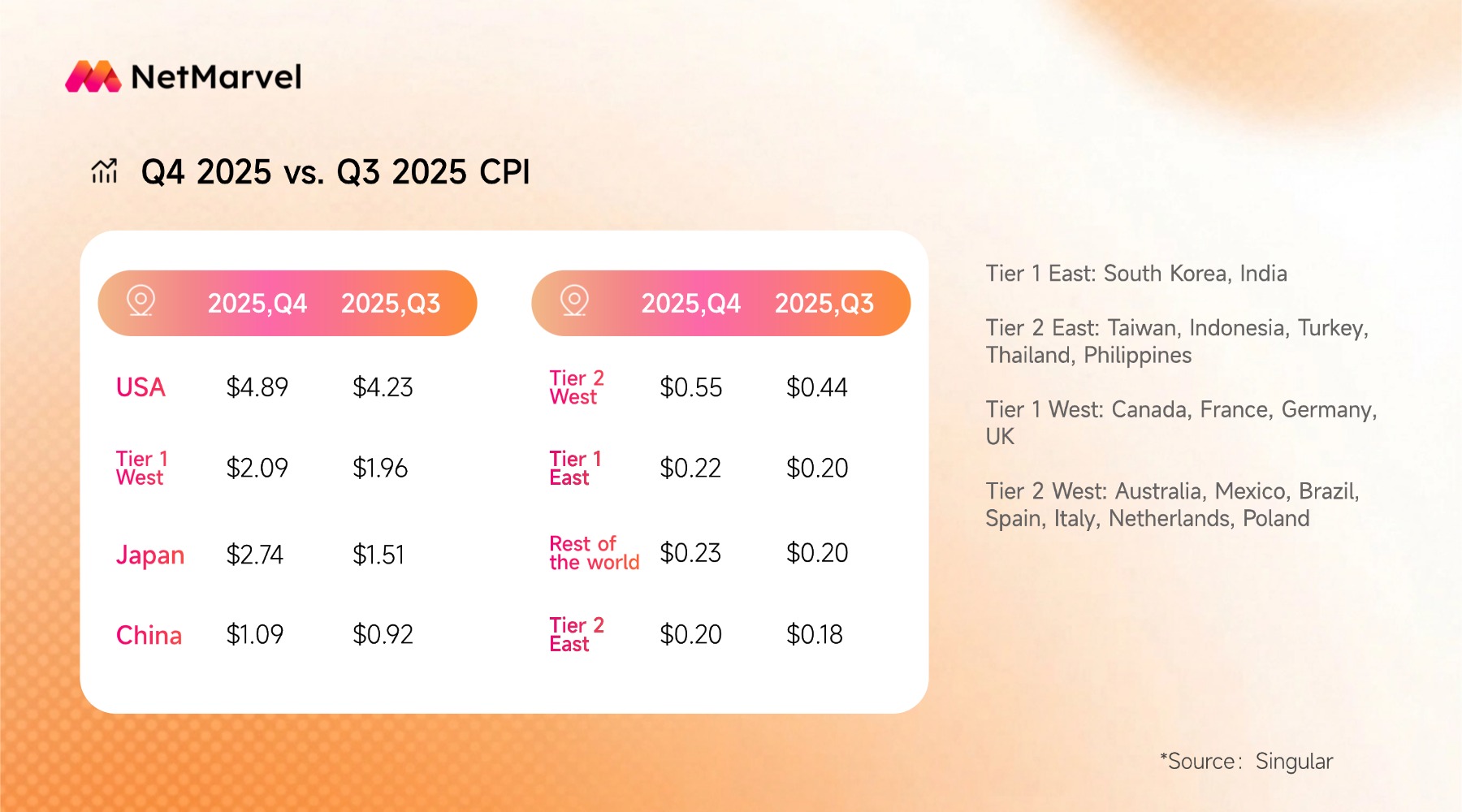
Regional differences remain significant. Tier 1 Western markets see CPI increase from $1.96 to $2.09, while Tier 2 Western markets rise from $0.44 to $0.55.
In this environment, simply pursuing lower CPI is no longer enough. Advertisers need to consider user quality, conversion efficiency, and downstream value when deciding where to allocate Q4 budgets.
Ⅱ. From Seasonal Campaigns to Full-Cycle Growth
Q4 can be divided into several key marketing windows. October is typically used for testing and pre-holiday preparation, November brings concentrated spending around Black Friday, and December shifts toward Christmas and New Year campaigns.
This makes early preparation critical. Instead of waiting for peak shopping periods to scale, advertisers can test markets, audiences, and creatives in advance, concentrate budgets during key moments, and continue retargeting after the peak.
A recent e-commerce case from NetMarvel's cooperation reflects this approach.
The advertiser combined In-App and CTV campaigns to reach users across different environments, while using tiered dynamic bidding across multiple markets to adjust investment according to traffic costs and user performance. Retargeting was also used to re-engage churned users and unlock additional value from the existing user base.
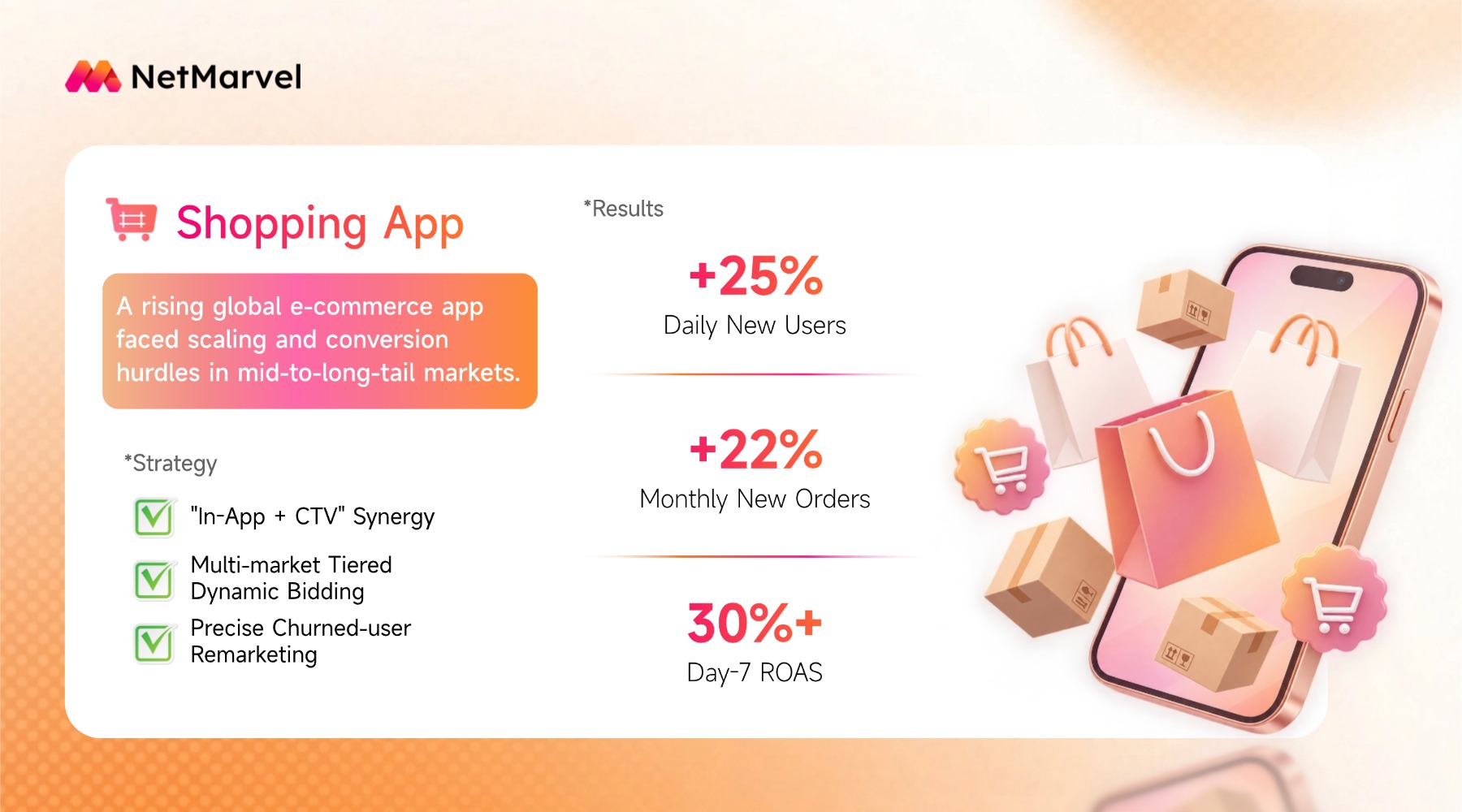
The campaign ultimately delivered 25% growth in daily new users, 22% growth in monthly new orders, and more than 30% improvement in D7 ROAS.
The key was not simply generating more traffic. By combining multi-channel reach, dynamic bidding, and user retargeting, the campaign built a more complete Q4 growth loop.
Ⅲ. Four Priorities for Q4 UA
Start early and scale in stages
Q4 is not the time for a one-shot budget bet. Complete market, audience, and creative testing before the peak season, then gradually increase investment based on performance.
Move from single-market scaling to tiered allocation
As acquisition costs rise in Tier 1 markets, mid- and long-tail markets can provide additional growth opportunities. NetMarvel's approach emphasizes adjusting bids and budgets according to market-level costs, user quality, and conversion performance rather than applying a one-size-fits-all strategy.
Diversify traffic sources and expand incremental reach
As Q4 competition intensifies, relying too heavily on a single channel can expose campaigns to greater cost and traffic volatility. NetMarvel's view is to combine In-App, social, DSP, and CTV to expand reach across different user environments.
CTV can also serve as an incremental touchpoint beyond mobile, working alongside In-App campaigns to create a more connected cross-screen user journey.
Extend UA into retargeting and LTV
As new-user acquisition becomes more expensive, existing users become increasingly valuable. Segmenting users based on behavior, activity, and churn stage allows advertisers to build more targeted retargeting strategies and unlock additional user value.
This is also a key takeaway from the redacted case: Q4 growth does not end when a user is acquired. It continues through engagement, retention, and reactivation.
Q4 is no longer simply a battle for seasonal traffic. It is a full-cycle competition covering acquisition, conversion, retention, and retargeting.
For global advertisers, the goal is therefore not just to control CPI, but to understand how much high-value user growth each dollar can generate and how much long-term value those users can deliver.