

The Future of Gaming: How to Systematically Attract Gen Z Players?


Gen Z is no longer the "future demographic" discussed in hypotheticals; they have rapidly evolved into the most influential force in the global gaming market. By 2030, Gen Z's global purchasing power is projected to reach $12 trillion. As they become the largest cohort of gaming consumers, they are fundamentally reshaping industry trends across gameplay preferences, content consumption, and spending habits.
This article is based on a recent interview from the media outlet "Deconstructor of Fun" and revolves around one core question: As Gen Z becomes the mainstream player base, how exactly should game products and growth strategies be adjusted?
The conclusion is straightforward yet poses a significant shock to traditional perceptions — Gen Z is not simply "younger versions of legacy players," but a demographic that brings an entirely new logic to user engagement.
Highly Engaged, but Not "Exclusive" Players
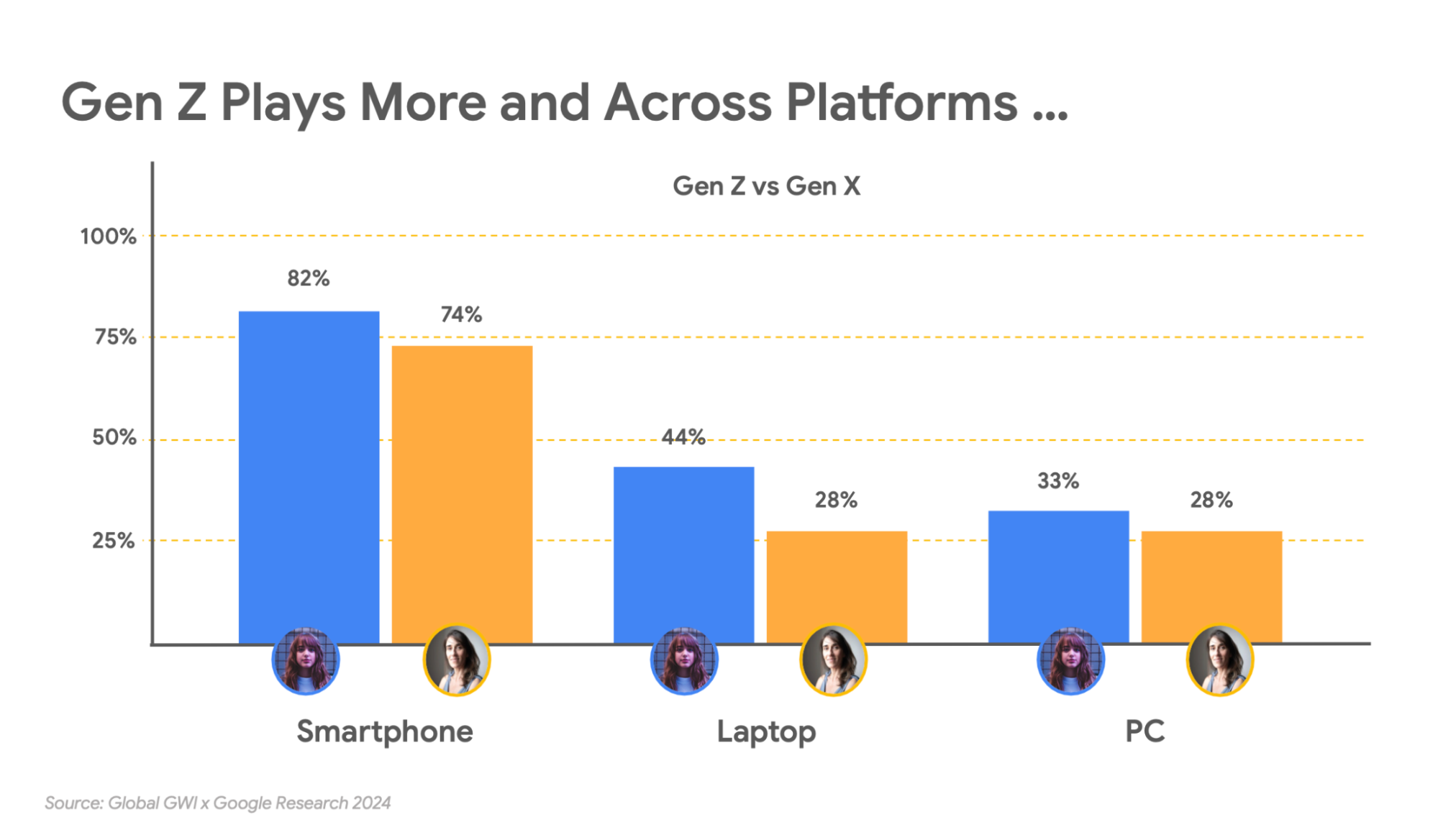
In terms of usage intensity and engagement depth, Gen Z is the most active generation of players in history. The sustained growth of mobile gaming since 2020 has been largely driven by this demographic. The vast majority of Gen Z players are highly active on mobile, while frequently pivoting between PC and console platforms.
More importantly, they are not "non-paying players." Whether in terms of In-App Purchases (IAP), subscriptions, or gaming-related digital consumption, Gen Z's overall spending has already surpassed that of Millennials and Gen X. However, in sharp contrast to their high engagement, they rarely immerse themselves in a single title for the long term.
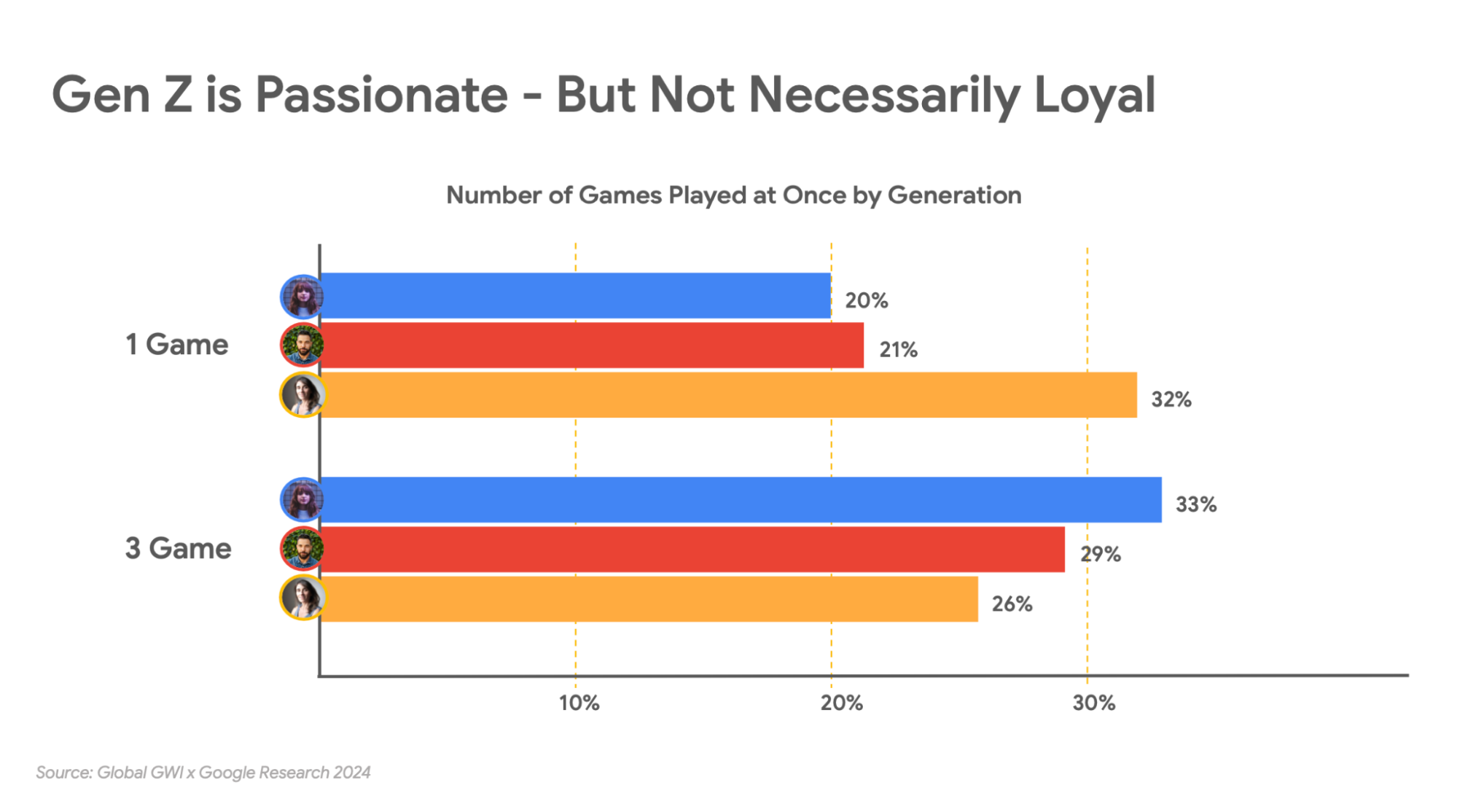
Unlike previous generations who might remain deeply tethered to one product for years, Gen Z is more accustomed to playing multiple games simultaneously and flowing rapidly between different content. This behavior does not indicate a lack of stickiness; rather, it stems from a fundamental shift in the perception of "switching costs" following an explosion in content supply.
Retention Logic is Undergoing a Structural Shift
Because of this, traditional retention strategies built around a single product's lifecycle are becoming obsolete. Tobias Knoke (Head of Gaming, Google EMEA) points out that instead of obsessing over "keeping players in one game," developers should consider how to "keep players within an ecosystem."
For Gen Z, loyalty is directed more toward familiar experiences, social relationships, and content styles rather than a specific product. This also means that developers need to manage user relationships from a more systematic, long-term perspective—such as through multi-product synergy, unified account systems, or the extension of worldbuilding and social ties.
Content Creators: The Core "Discovery Gateway" for Gen Z
In the path of game discovery, there is a fundamental difference between Gen Z and previous generations.
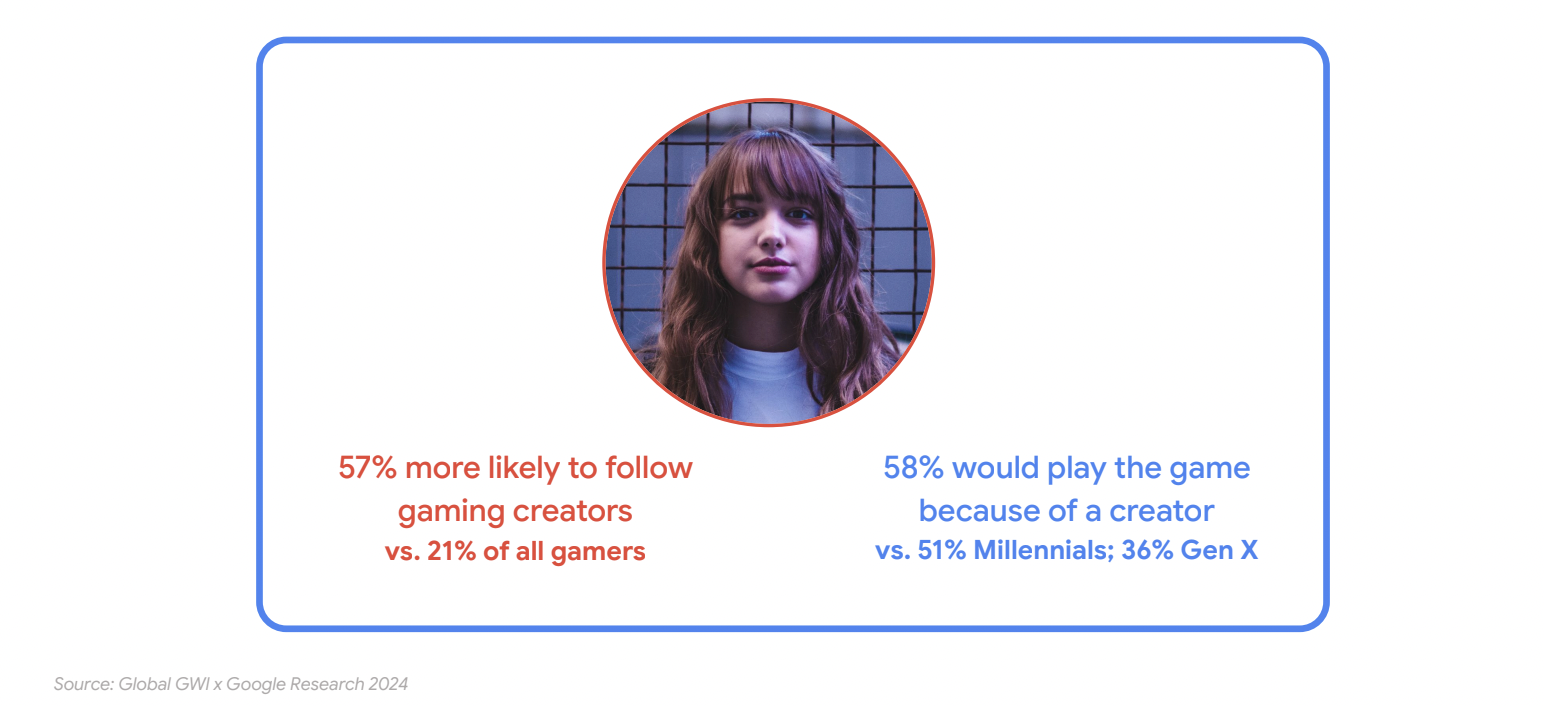
They do not rely on traditional advertising, charts, or app store recommendations; instead, they are highly dependent on creators across social media and content platforms. When a creator they trust starts playing or discussing a game, the conversion efficiency is far higher than any form of hard advertising.
This explains why the "Creator Economy" has become a foundational infrastructure in gaming marketing rather than a supplementary tactic.
A mature creator strategy typically spans three stages:
- Development Stage: Invite creators to participate in testing and provide early feedback.
- Launch Stage: Build credible awareness through authentic experience-based content rather than pure exposure.
- Operations Stage: Form long-term partnerships with creators to jointly amplify the value of content updates and events.
For teams with limited resources, the most effective starting point is often not "buying top-tier talent," but finding micro-influencers who are already spontaneously discussing your product and establishing organic partnerships.
Gen Z's Game Selection is Essentially a Social Selection
Another easily underestimated shift is the strong social attribute of Gen Z's gaming behavior. For them, gaming is rarely a purely solitary experience; it is closely bound to their social circles.
Whether it is the initial acquisition, continued investment, or ultimate churn, peer influence is critical. The departure of one player often leads to the loosening of their entire social cluster; conversely, a successful re-engagement of one person can drive the entire group back to activity.
This makes traditional retention models centered on "individual behavior" gradually obsolete. In contrast, systems built around friendships, team collaboration, and group goals are more likely to foster long-term stickiness.
Cross-Platform Experience is Now a Baseline Expectation
Gen Z does not define themselves as "mobile gamers" or "console gamers." They care about the content itself and naturally expect it to be seamlessly accessible across different devices.
Switching frequently between mobile, PC, console, and tablet is the norm for them. If a game's experience is missing or fragmented on a key device, it will often be quickly replaced.
This means that cross-platform capability is shifting from a "premium feature" to a "baseline threshold." When an experience is not continuous, players will not wait for optimization—they will simply move to the next option.
The Prerequisite for Monetization is Respecting the Player Experience
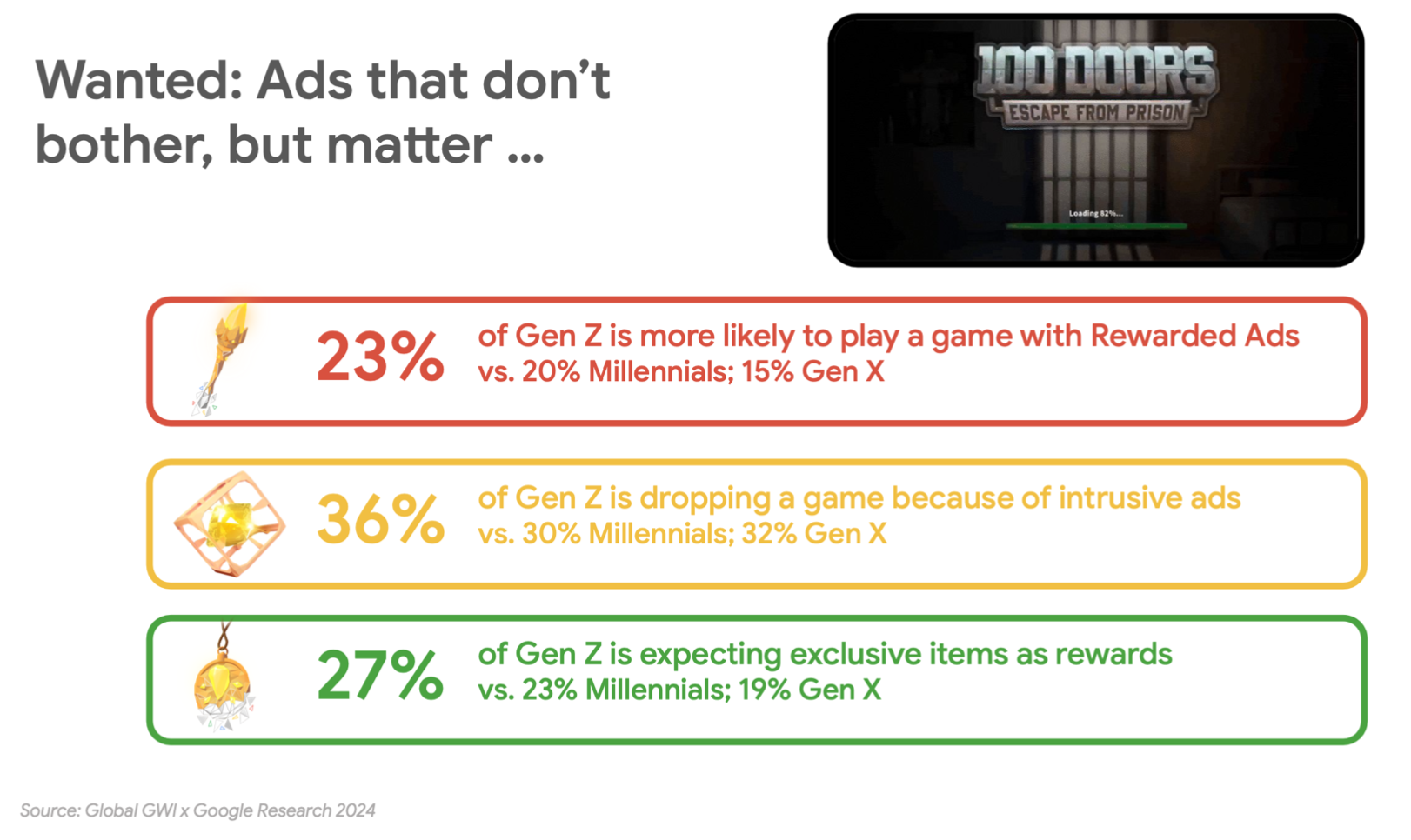
At the commercialization level, Gen Z is not repelled by spending, nor are they naturally averse to ads. What they truly reject is design that is disruptive, forced, or lacks a sense of value.
As long as the rewards are clear and the user agency is respected, rewarded ads and paid content still see high acceptance. Especially in areas involving aesthetics, personalized expression, and identity display, Gen Z is often willing to pay for "uniqueness."
However, once a monetization mechanism is perceived as a drain on time and attention rather than a fair value exchange, churn occurs rapidly.
Understanding Gen Z is Essentially Understanding the Future
Gen Z is reshaping the fundamental assumptions of the gaming industry at an accelerated pace. They are social-first, platform-agnostic, and rely on content rather than ads for discovery, while remaining highly sensitive to experience and value.
For developers, the real challenge is not "how to please young users," but whether they are willing to overhaul their product structures, growth engines, and long-term relationship management to align with this new logic.
Gen Z never lacks alternative options. They will only stay in games that truly understand them.