The core logic of mobile app growth over the past few years has revolved around a single question: How do you buy more users at a lower cost?
Entering 2026, this volume-driven growth model is steadily losing steam.
On one hand, user acquisition dividends have plateaued, traffic competition has intensified, and ad costs remain under continuous pressure. On the other hand, while AI has dramatically accelerated the production efficiency of ad creatives, churning out more content hasn't yielded proportional growth. Instead, it has accelerated user content fatigue, leading to diminishing ad returns.
Sensor Tower data shows that global mobile app downloads hit 50 billion in 2025, a 7% year-over-year decline, while in-app purchase revenue reached $82 billion, up 1.4% year-over-year—creating a divergence between downloads and revenue.
This indicates that the mobile market is shifting from a phase of "contending for new users" to a new era of "competing for user value." For advertisers, the real challenge is no longer just how to acquire users, but how to ensure that every acquired user generates higher retention, deeper engagement, and a longer lifetime value (LTV).
I. Rising CPI: It's Not Just About Expensive Traffic
In a saturated market, the most direct change is the continuous rise in customer acquisition costs.
Taking the US market as an example, Sensor Tower data reveals that mobile game downloads in the US dropped 3% year-over-year in the first quarter of 2026 to approximately 3 billion, while mobile ad impressions grew 12.6% and ad spend surged 15.4% to $48 billion.
Beneath this lies a deeper shift: high-quality, low-cost incremental traffic is becoming increasingly scarce.
In the past, scaling up ad budgets could drive volume growth; today, an increased budget doesn't necessarily mean a year-over-year increase in new users, and it may even trigger a rapid decline in marginal ROI.
As a massive number of apps contend for the exact same audience groups, ad creatives have turned into a new battleground of hyper-competition.
According to data from AppGrowing, non-gaming advertisers saw a 73.3% year-over-year surge in average monthly creative volume in 2025, with over 21.3 million new creatives launched—accounting for 94.5% of the total.
Now that AI has further lowered the barrier to creative production, generating dozens or hundreds of creatives a day is no longer a difficult feat.
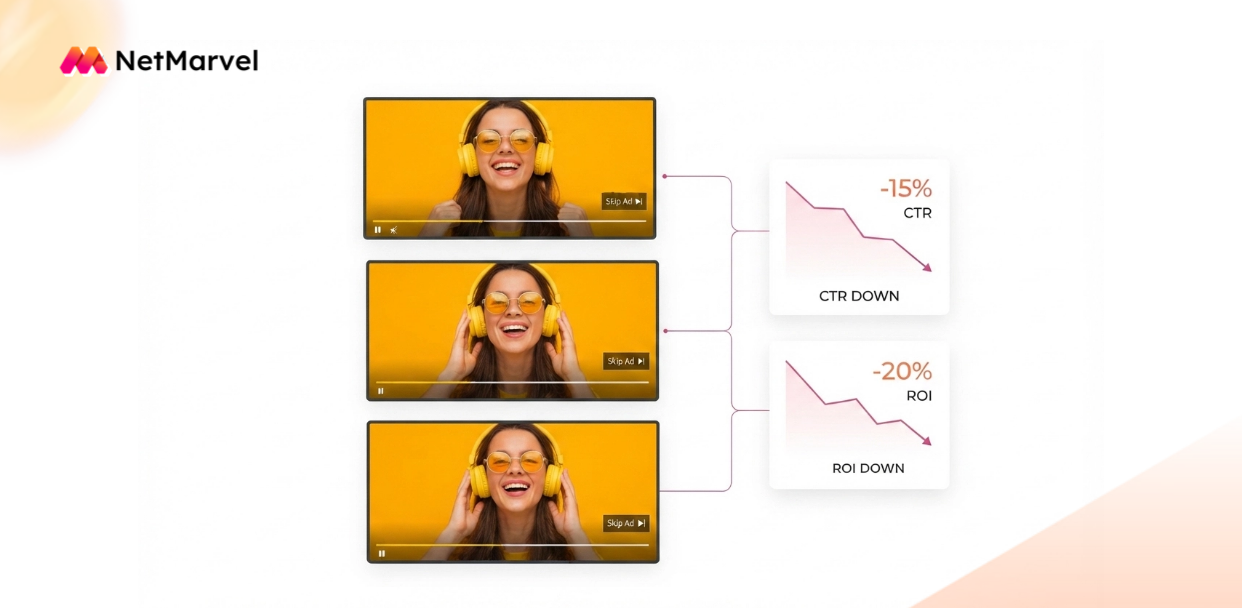
Yet, problems follow suit: when everyone is producing creatives at a high frequency, declining ad completion rates and click-through rates driven by homogenization and aesthetic fatigue have become a shared pain point for advertisers.
II. Focusing on Vertical and Contextual Channels to Match User Mindset
Behind the declining ROI and diminishing ad effectiveness lies a fundamental mismatch between ads and the user's immediate state of mind.
SmartNews data shows that users in passive entertainment settings like social media are in an "autopark" mental state, exhibiting up to a 91% blind spot toward traditional community ads. Any form of ad innovation struggles to move a user who is cruising on autopilot and resisting deep thought.
The breakthrough is not simply abandoning social media, but reconfiguring the media mix: while maintaining scaled acquisition in core performance channels, shift a portion of the budget to high-value contexts where users possess explicit intents for interest, information retrieval, or active exploration.
The value of such contexts is that ads are no longer merely competing for attention; they align seamlessly with the user's current content consumption context and psychological state. Backed by NetMarvel's "vertical + contextual" traffic matching solution, advertisers can break free from the single information-stream red ocean:
Diversified Matrix for Precision Reach: Leveraging a rich long-tail app matrix to deeply cover diverse vertical domains such as social, mobile gaming, utilities, and entertainment, allowing ads to naturally integrate into users' specific interest circles and high-frequency usage scenarios to achieve psychological resonance.
Expanding CTV Living Room Scenarios: Comprehensive coverage of CTV channels extends marketing reach into the immersive living room setting of home large screens, building deep brand connections during relaxed, focused, and high-value moments.
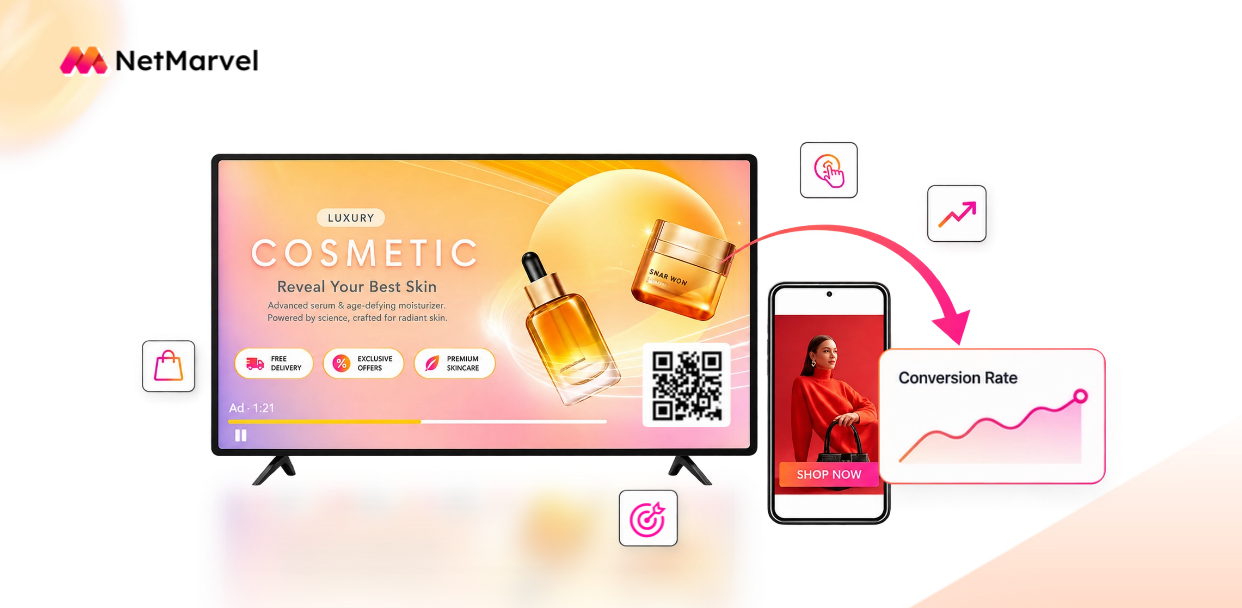
Therefore, the media strategy for the next stage shouldn't just answer "Where is CPI lower?" but also:
Where are users more willing to listen to you?
Shifting from "contending for the cheapest traffic" to "competing for high-value mindset" is the only way to genuinely reduce dependence on single-feed platforms and algorithmic traffic, building a more stable growth engine.
III. Optimizing User Mindset, Not Just Clicks
Many advertisers perceive "creative fatigue" purely at the material level:
Creatives watched for too long → CTR drops → swap in a new batch → re-test.
This only resolves surface-level symptoms. What truly deserves attention is that ad creatives are increasingly influencing the subsequent performance of the user lifecycle.
An ad that drives a massive volume of installs does not necessarily mean it brings in high-quality users. In some cases, high download performance can even be accompanied by lower long-term user loyalty. For instance, certain ads rely on exaggerated gameplay, false benefit claims, or content disconnected from the actual product experience to capture clicks. Even if short-term CTR and CVR look attractive, it can lead to low retention and high churn, ultimately driving up true CAC.
Therefore, genuinely effective creative shouldn't just "trick users into downloading"—it needs to complete user filtering, value communication, and expectation management before the click occurs. Ads must tell users what the product is, why it is worth using, and what problems it solves, allowing users to form a relatively accurate product perception prior to installation.
Furthermore, the evaluation criteria for creative optimization should gradually expand from top-of-funnel metrics like CTR and CPI to activation rates, D7/D30 retention, ROAS, and LTV. Especially now that AI has lowered creative production costs, the focal point of competition is no longer who can generate more assets, but who can find creatives that genuinely attract high-value users.
The ultimate destination of a creative shouldn't be a single click; it should be the beginning of a long-term user relationship.
IV. Turning Retention into a Second Growth Curve to Tap Long-Term User Value
Once users arrive, why are they willing to stay?
In a saturated market, retargeting shouldn't just be a "remedial measure" after user churn occurs; it must be shifted upstream into the entire growth system, becoming the core link connecting acquisition, activation, retention, and LTV.
A ZBD survey of 195 Western mobile game developers shows that 74% consider lifecycle marketing one of the most influential current retention strategies, with 50% of studios increasing their budgets for retention and reactivation.
True retargeting shouldn't simply involve sending identical ads, push notifications, or discounts to all churned users. Instead, it should segment users based on usage frequency, core behaviors, payment status, churn duration, and historical preferences, designing tailored touchpoints and incentives for different lifecycle stages.
Taking the successful practices of NetMarvel's retargeting solutions as an example, the platform leverages deep user data analysis and intelligent algorithms to achieve refined operations across multiple touchpoints and diverse scenarios:
Full-Lifecycle Precision Segmentation: The new user stage focuses on resolving activation and conversion, high-potential users are driven toward continuous usage, high-value users have their loyalty and repeat purchases reinforced, dormant users are offered windows for return, and churned users re-establish value connections through exclusive privileges and product updates.
Multi-Touchpoint Contextual Awakening: Relying on algorithms to deliver personalized content precisely to the user's high-frequency touchpoints, providing dynamic ads that match their mindset at the right time and scenario, realizing one-to-one recalls and deep retention.
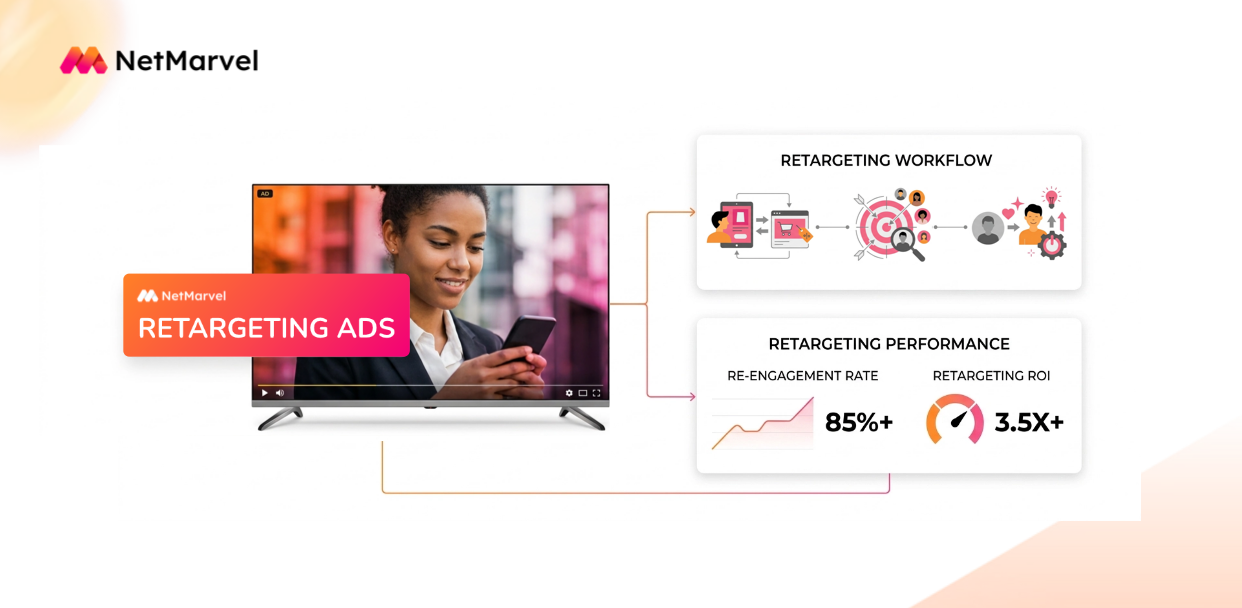
For instance, a lifestyle service app integrated NetMarvel's remarketing solution to conduct secondary mobile touchpoints targeting high-potential users already exposed via CTV channels. This not only significantly increased the resurrection rate of silent users but also propelled a substantial jump in overall LTV.
In essence, this transforms growth from a one-off "acquisition" into continuous "lifecycle growth."
When new users become increasingly expensive, the traffic most worth optimizing is often the users you have already purchased.
Ⅴ. Conclusion
The mobile app industry is entering a new growth phase. The past growth model relying on traffic scale is giving way to more refined user management.
Core competitiveness in the future will no longer be the sole pursuit of the lowest CPI, but the establishment of a complete growth system encompassing "precise acquisition, high-quality activation, personalized touchpoints, continuous retention, remarketing, and LTV enhancement."
True growth in the era of stock markets lies in managing every acquired user better, converting a single app install into a long-term user relationship.